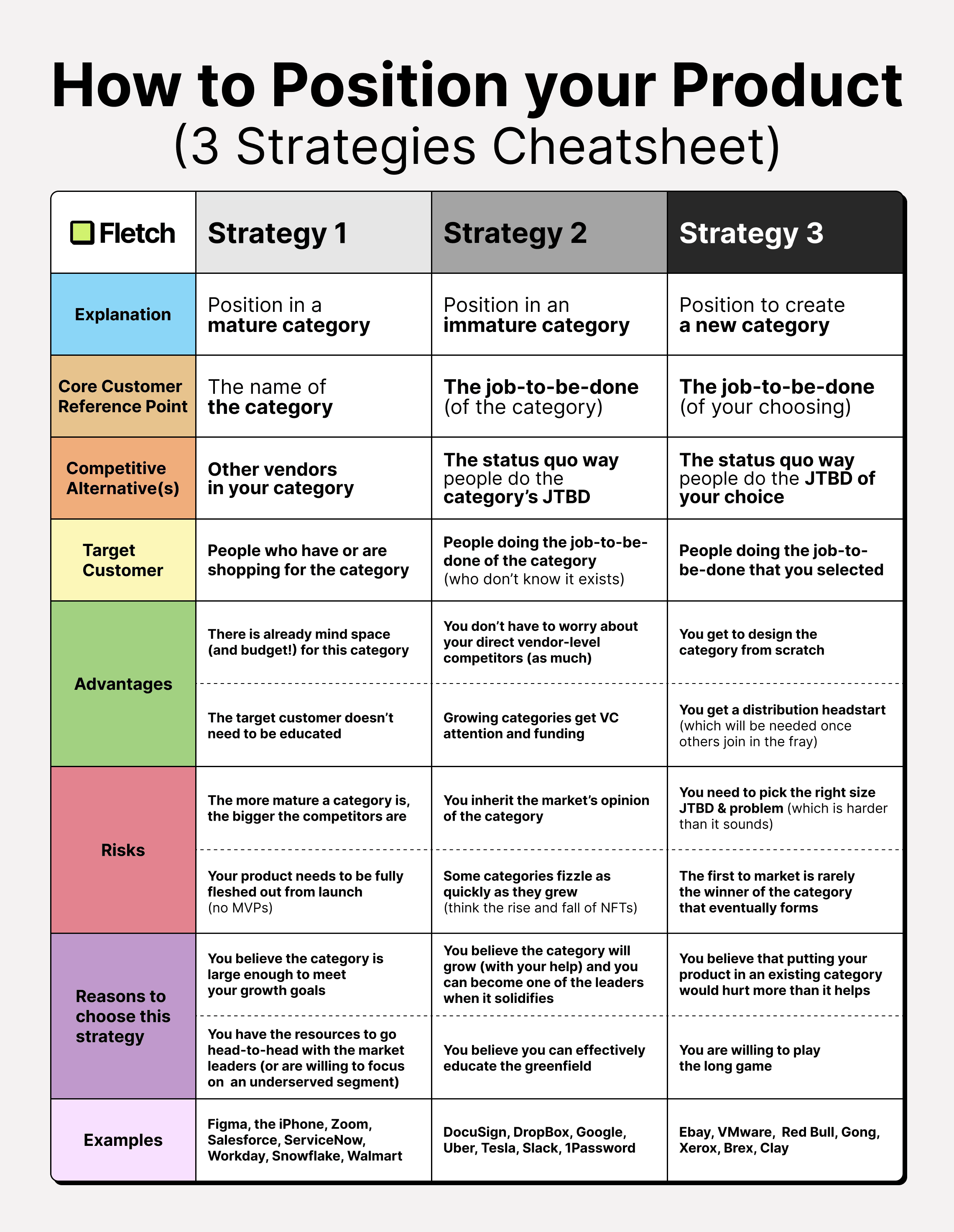
There are only three positioning strategies
A guide to understanding and picking the right one for your product
We’ve positioned 500+ companies.
In that time, we’ve learned that what looks complex is actually quite simple. There aren’t infinite possibilities. In fact, there are only three strategies for positioning.
Each has advantages, risks, and specific elements to consider. None are a silver bullet. Each strategy can lead to massive success or massive failure. You choose based on market data, entrepreneur instinct, and a love of the game.
Let’s go through all three now.
(PS. if you find this newsletter helpful, please share something you found insightful from it on LinkedIn. We are still in our infancy and would really appreciate your help getting the word out that this exists 🙏🏻)
Strategy 1: Position in a mature category
What this means
You put yourself in a mature category, then say why you’re better than everyone else in that category.
Note: a product category is mature when it has established leading vendors, clear buying criteria, external validation from analysts like Gartner, dedicated conferences and communities, and a shared vocabulary that the market, companies, and influencers all recognize.
The primary goal of this strategy is to steal market share from the category leaders.
Advantages
1) There is already mind space (and budget!) for this category
People explicitly shop for it, and they will actively search for your type of solution. From a subscription perspective, you could argue companies re-purchase this category every month!
2) The target customer doesn’t need to be educated
You don’t have to spend any time on why these customers need the category or how they would use it. They already have it or have seriously evaluated it in the past. The bulk of the up-funnel marketing work has already been done long before you came along.
Risks
1) The more mature a category, the bigger the competitors
Think of it like a shelf at the store. The market leaders get the bulk of the shelf space and end up winning the majority of deals by default.
You need to fight tooth and nail to make it onto the shelf (i.e. the shortlist a company would evaluate), and if you don't have serious differentiation or a distribution advantage, then you're likely doomed.
2) This strategy won’t work for people who don’t know the category already
Talking about why you’re the best “Pursuit Intelligence Platform” won’t make any sense to someone who doesn’t know what a “Pursuit Intelligence Platform” is. Instead, you’ll be making the conscious decision to prioritize the “category-aware” — for better or for worse.
You may decide to devote some of your GTM investment to reaching the category-unaware, but they will be heavily de-emphasized in comparison to what you spend on the category-aware.
Reasons to choose this strategy
1) You believe the category is large enough to meet your growth goals
When we talk about the size of the category, we mean the total amount spent across all the vendors in the category.
Other people measure categories by potential and include companies who could theoretically need the category in the future. To keep our definition more conservative, we’ll stick with actual dollars that have already been spent.
As an example, the size of the CRM market would be the revenue of Salesforce, HubSpot, Attio (and all other CRMs) combined.
2) You believe you have the resources to go head-to-head with the market leaders
The most ambitious version of this strategy is to go directly against the market leaders to compete for the entire market.
Think Samsung vs. Apple.
Pepsi and Coke.
OpenAI and Anthropic.
These are bitter battles for total domination.
Obviously, this implies that you either currently are one of the market leaders — or that you have massive resources at your disposal from a product and go-to-market perspective to take them on.
But if none of those things are true…
3) You believe you could meet the needs of an underserved segment
Maybe you believe you don’t have the resources to go head-to-head.
But you might be able to carve out a smaller portion to dominate.
DuckDuckGo positions in the search engine market directly against Google… but they focus on the subsegment of privacy-minded individuals.
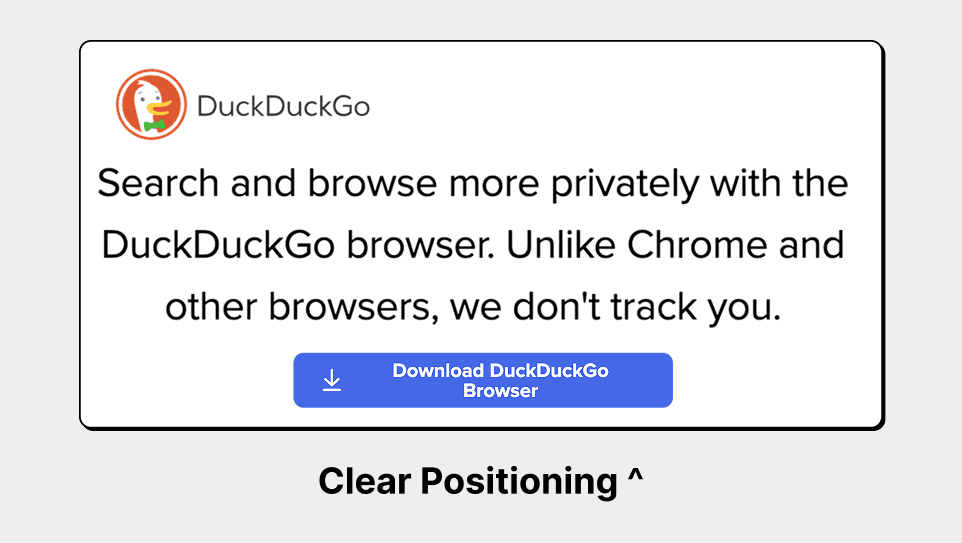
Their entire differentiation is built on the concept that (unlike Google) they will never track you.
For the vast majority of Google users, this just isn’t that interesting… definitely not interesting enough to switch to a new search engine.
But for the privacy-minded individual, this is compelling enough to make the jump into an entirely new ecosystem.
And this subsegment that DuckDuckGo targets is large enough to be meaningful. Analysts estimate they currently do ~$100M in annual revenue.
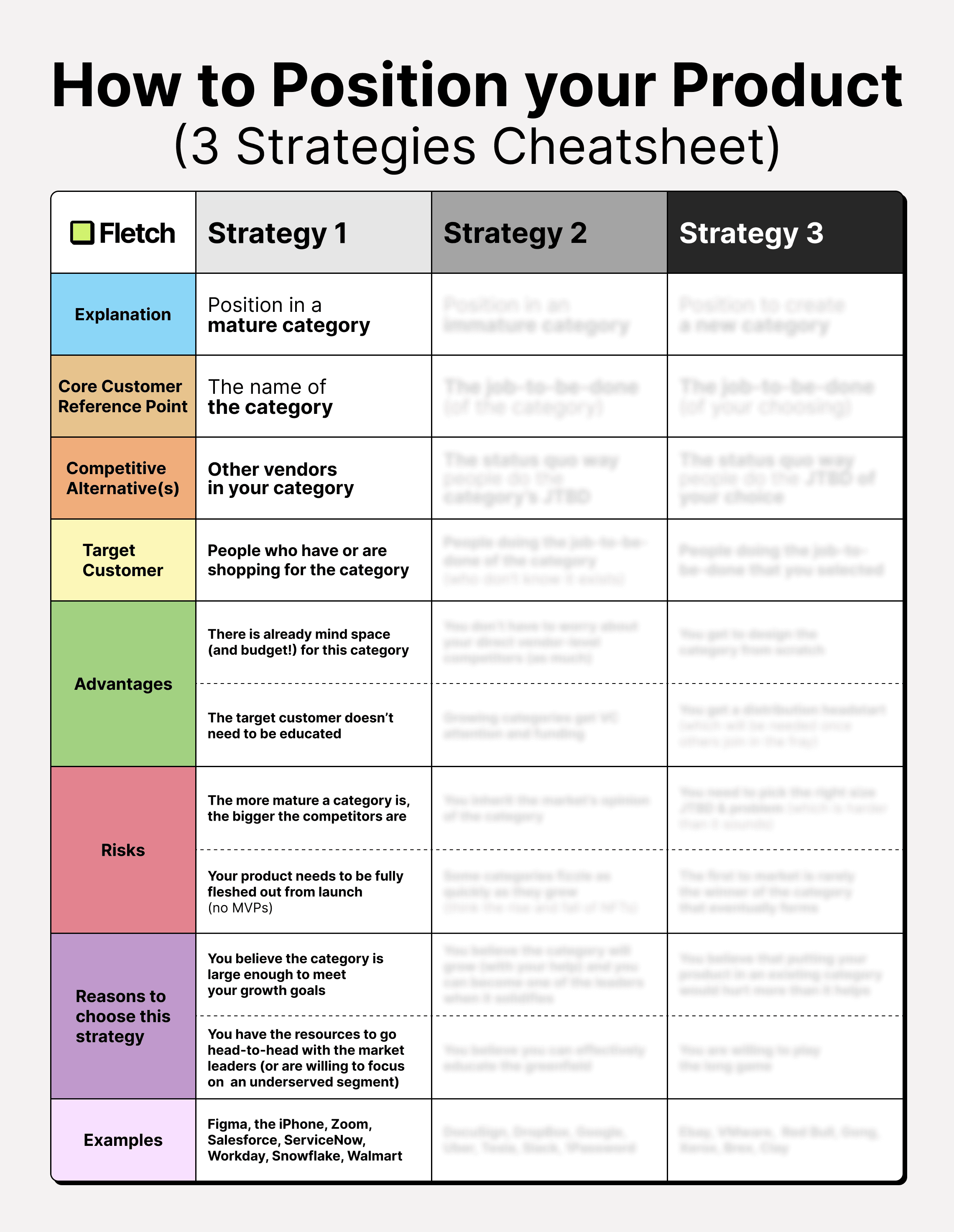
Strategy 2: Position in an immature category
What this means
You position yourself in an existing category, then go sell it to people who have never heard of the category.
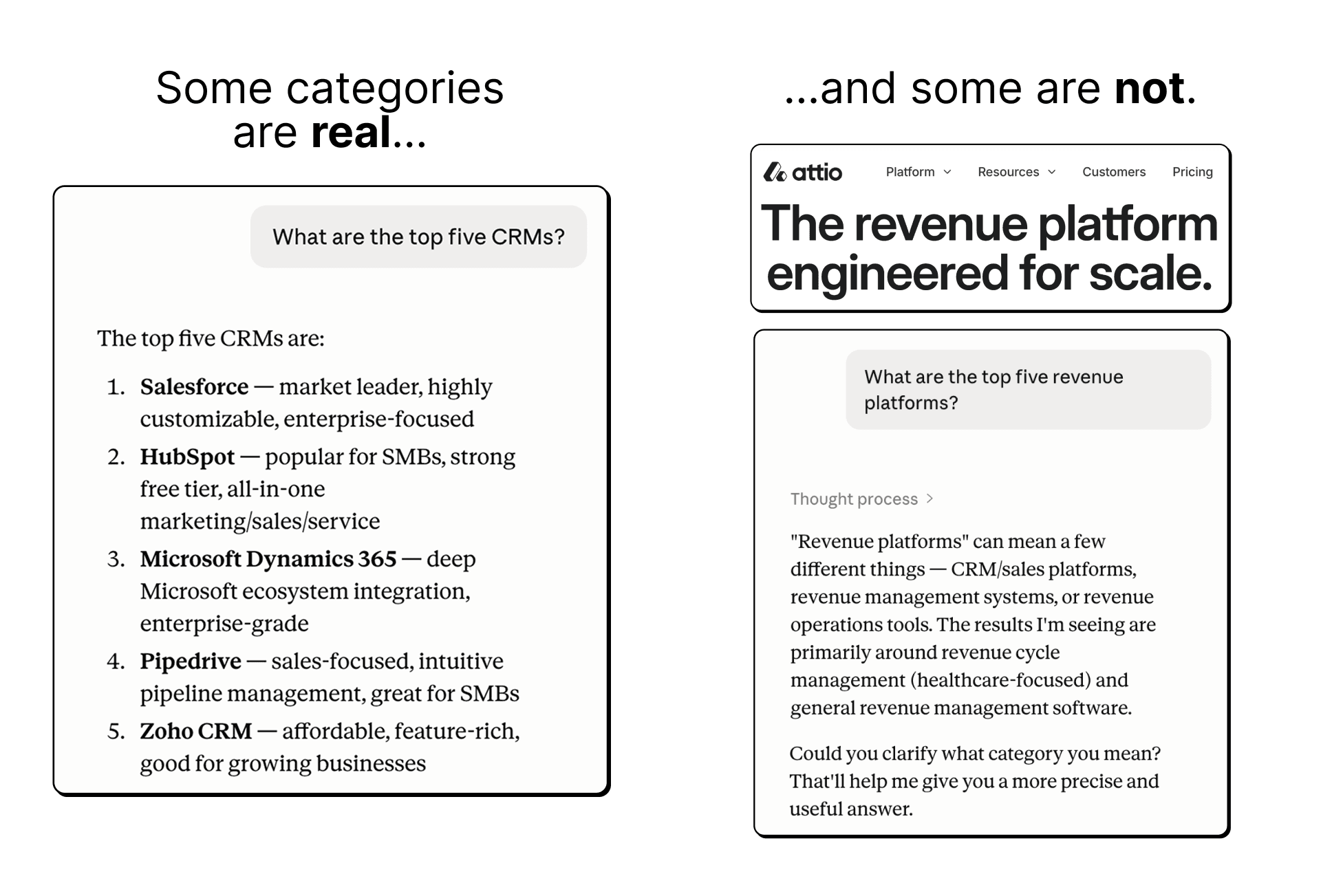
A quick way to tell if a category actually exists: ask ChatGPT or Claude, “what are the top 5 vendors of ______ category?”
If it lists known companies in the order you’d expect, then it probably exists.
If it says something like, “Can you be more specific on what you mean?” then it probably doesn’t yet.
Advantages
1) You don’t have to worry about your direct vendor-level competitors (as much)
It’s much more of a “greenfield” opportunity. You’re targeting people who don’t know your type of solution exists. Even though it’s not entirely new, it’s new to them.
Since they don’t know about the other vendors, you can focus your marketing on how you fix their broken way of doing things.
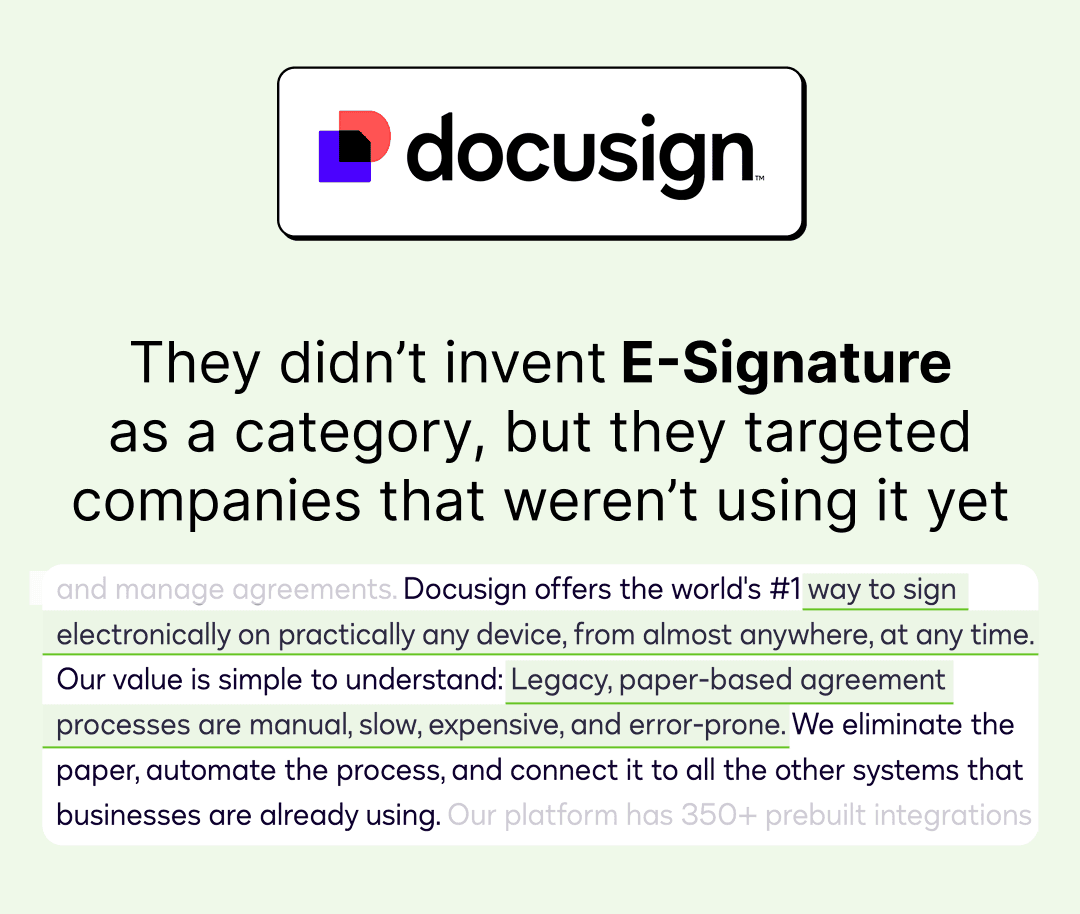
As an example, Docusign did not invent the category of “e-signature”, but they popularized it and sold it to companies that were primarily handling signatures on paper.
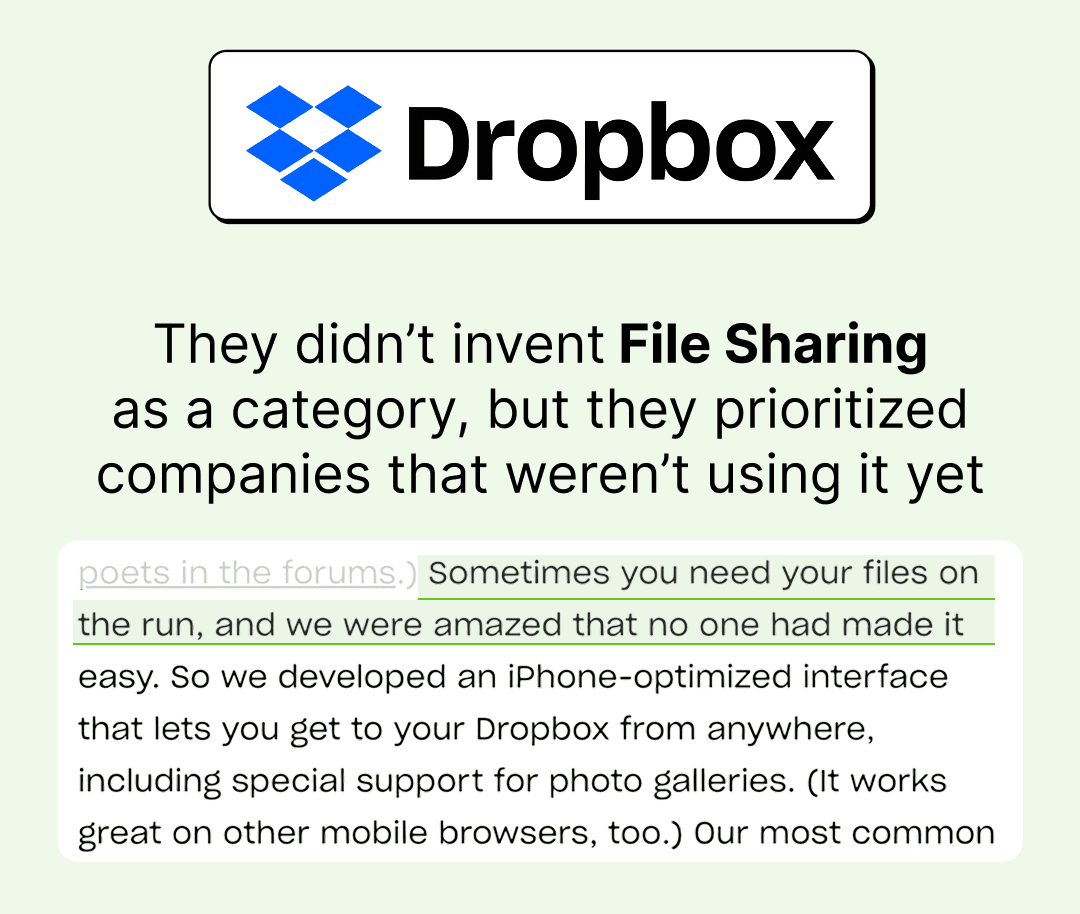
Similarly, Dropbox didn't invent “file sharing tools” as a category, but they took it to people who hadn’t used a dedicated product for it before.
2) Growing categories get VC attention and funding
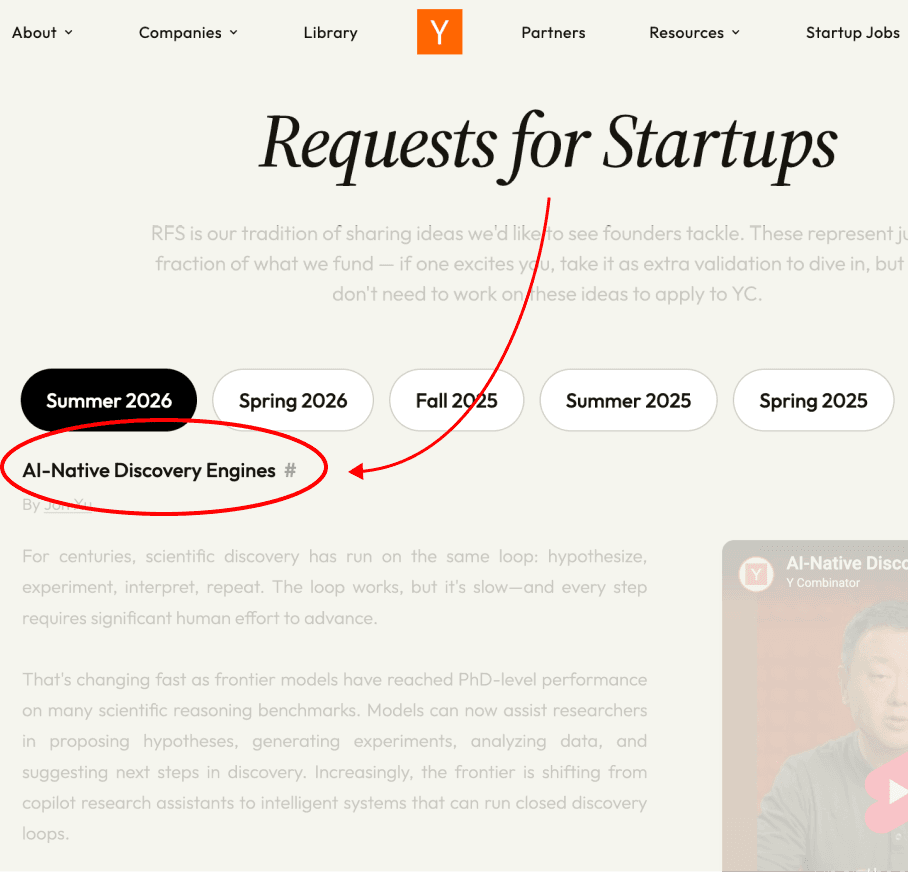
Certain categories have built-in hype. Y Combinator will explicitly request startups to apply if they fit certain category buckets, because they believe the categories have growth potential.
By adopting the language of this new, nascent category, you get the benefits of that hype.
Risks
1) You are introducing a new solution to people who’ve never heard of it
The advantage of this strategy is also the risk. People won’t come looking for your solution – you have to bring it to them. Rather than placing your product on a shelf, you’ll be taking it door-to-door.
Can your marketing engine handle the educational burden?

2) You inherit the market’s opinion of the category
Take AI SDRs. This was an incredibly buzzy category, and VCs were bending over backwards to fund these businesses.
Then Artisan started running ads that said, "Stop hiring humans." Bernie Sanders brought them up on Joe Rogan's podcast, and Joe called them "demonic."
If you had jumped on the bandwagon of the AI SDR category because of its hype, you’d also quickly inherit its negative press.
3) Some categories fizzle as quickly as they grow
For a brief window, any category that was associated with blockchain received massive hype (and funding).
But over time, many died as quickly as they had expanded. Launching an NFT startup in 2026 would look very different than launching in 2021.

4) If you target the enterprise, you’ll need a secondary positioning strategy for your competitors during the sales process
When large companies buy software, they usually require multiple vendors to be evaluated.
In the final stages of a deal, you’ll need a ready answer for why you’re better than the other vendors in your same small (but hopefully) growing category.
Hopefully, because you were the first to reach this company, they’ll give you preferential treatment during the head-to-head evaluation.
Reasons to choose this strategy
1) You believe the category will grow (with your help) and you can become one of the leaders when it solidifies
In the same way that VCs are betting on the founders, startups taking strategy 2 are betting on the category.
You firmly believe the world will have fully adopted this category within X number of years (and that you have the funding to stick around during that time).
You can picture it becoming a dedicated line item in every company’s budget, and that you will get the lion’s share of the new business.
2) You believe you can effectively educate the category-unaware market
While some companies are heavily sales-led, you have marketing in your bones.
You understand that you’re playing the long game. You’re not interested in short term growth hacks. You’re committed to consistent educational content delivered over time… and you have the people, patience, and talent to pull it off.
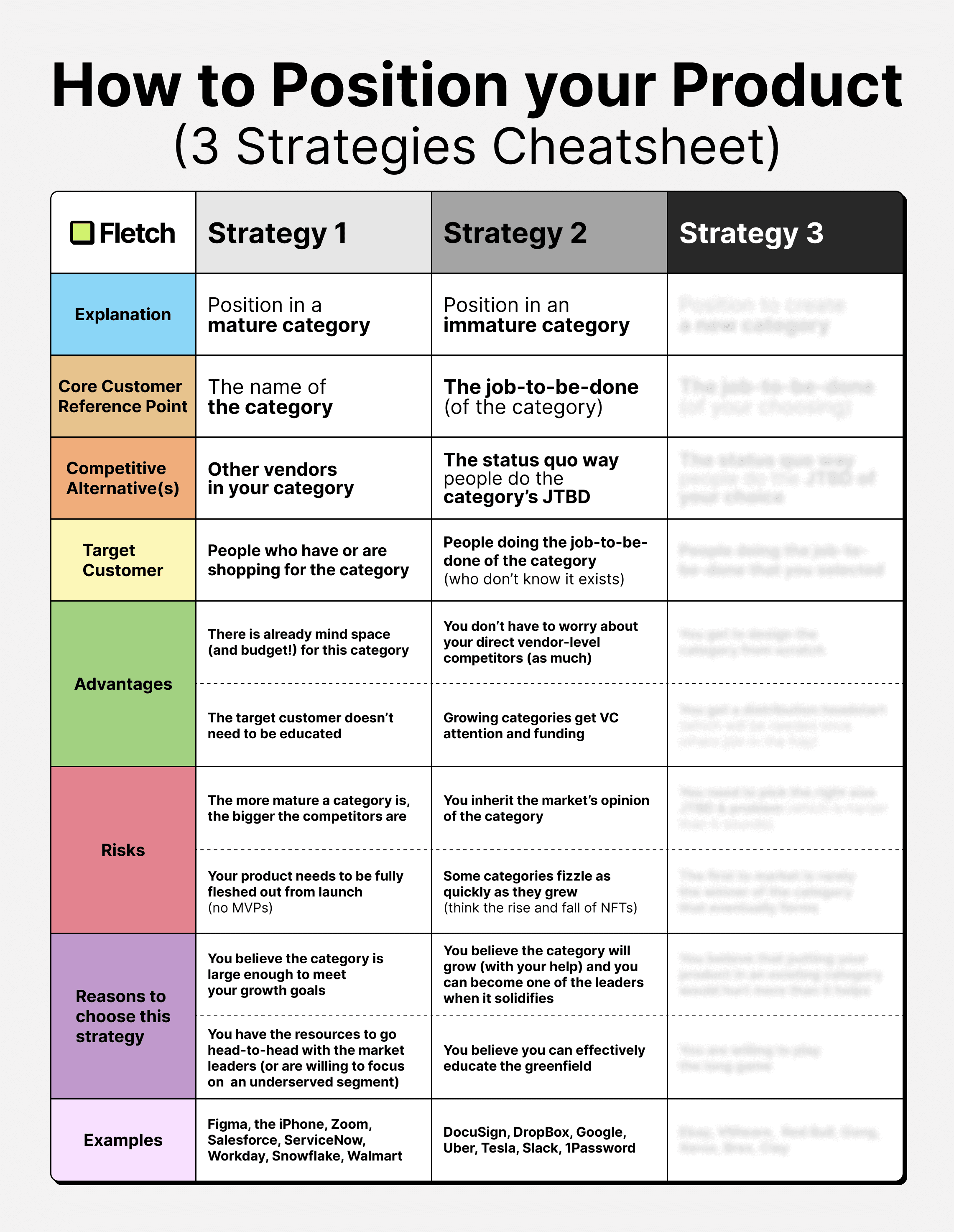
Strategy 3: Position to create a new category
What this means
You refuse to adopt anyone else’s category and seek to create your own from scratch.
Advantages
1) You get to design the category from scratch
You can decide the size of the problem you’re fixing.
You might want to focus the category on a small job-to-be-done (JTBD) that is fixed with a point solution that scales extremely fast — think Calendly, Fyxer, etc.
Or, perhaps you want to tackle a larger company initiative, like Vanta did with “getting SOC II compliant” or like WorkOS did by focusing on "helping your product become enterprise-ready."
2) You get a distribution head start
If you gain traction for your new thing, eventually others will jump in and adopt the category language as you’ve framed it.
The advantage you have at that moment is that you’ve already spent time convincing the market to associate you first and foremost with the new category.
Risks
1) You need to pick the right size JTBD & problem (which is harder than it sounds)
You may believe you can tackle a giant company-wide issue… but this risks vagueness and strains credulity.
For example, countless sales tech vendors went to market around "growing revenue." The pitch was essentially, "Are you trying to grow your revenue? Then adopt our new type of software!”
This is such a high-level job-to-be-done that it serves as a poor reference point to understand the product itself: (i.e. "Okay, but what IS your product?").
Additionally, it just isn’t believable ("If I had a dollar for every vendor that promised to grow my revenue…")
2) The first to market is rarely the winner of the category that forms
Vrbo started 13 years before Airbnb, and yet Airbnb won the market.
Anthropic recently surpassed OpenAI in market cap.
AltaVista was the first search engine, not Google.
Uber was not the first ridesharing app.
If you create a new category that proves to have commercial success, more often than not, a much larger incumbent will simply use your initial success as a blueprint to copy — and then outperform you with their vast resources and distribution networks.
Slack had a large head start over Microsoft… but Microsoft saw Slack's blueprint, copied it, and released Microsoft Teams to all their existing customers essentially for free, locking Slack out of the enterprise.
3) People may reject your new category
When Docusign re-positioned as “Intelligent Agreement Management,” the market laughed.
To truly bear a new category label, you need to be fundamentally different from the other solutions. Or else people will simply continue to put you in the pre-existing bucket (as they did with Docusign, continuing to call them “e-signature.”

Reasons to choose this strategy
1) You believe that putting your product in an existing category would hurt more than it would help
Most startups create products that could conceivably fit in an existing category (even if imperfectly).
I’m sure internal engineers at Apple balked at calling the iPhone a “phone,” considering other phones did 2% of what an iPhone could do.
But to create a category, you would need to believe that any existing category label would hurt more than it would help.
You need to believe that it’s better to convince all the stores of the world to create a brand new shelf just for your product… rather than add your product to a shelf that people visit regularly.
2) You are willing to play the long game
Similar to strategy 2, this can take an incredibly long time. It is not for the faint of heart (nor the shallow of pocket).
We would love your feedback on this newsletter! Please shoot over your thoughts to fletcher@fletchpmm.com.
Additionally, if you have someone who you think would be interested in product positioning, consider inviting them to subscribe (just send them this link).
FletchPMM is a positioning consultancy that has helped 500+ B2B software companies find their positioning strategy, document it in an internal deck, and share it on a rewritten homepage.